
Setting up a cloud kitchen in Pakistan
A cloud kitchen removes the dining room and every problem that comes with it — and replaces them with a different set. What the model is genuinely good at, and what it demands.
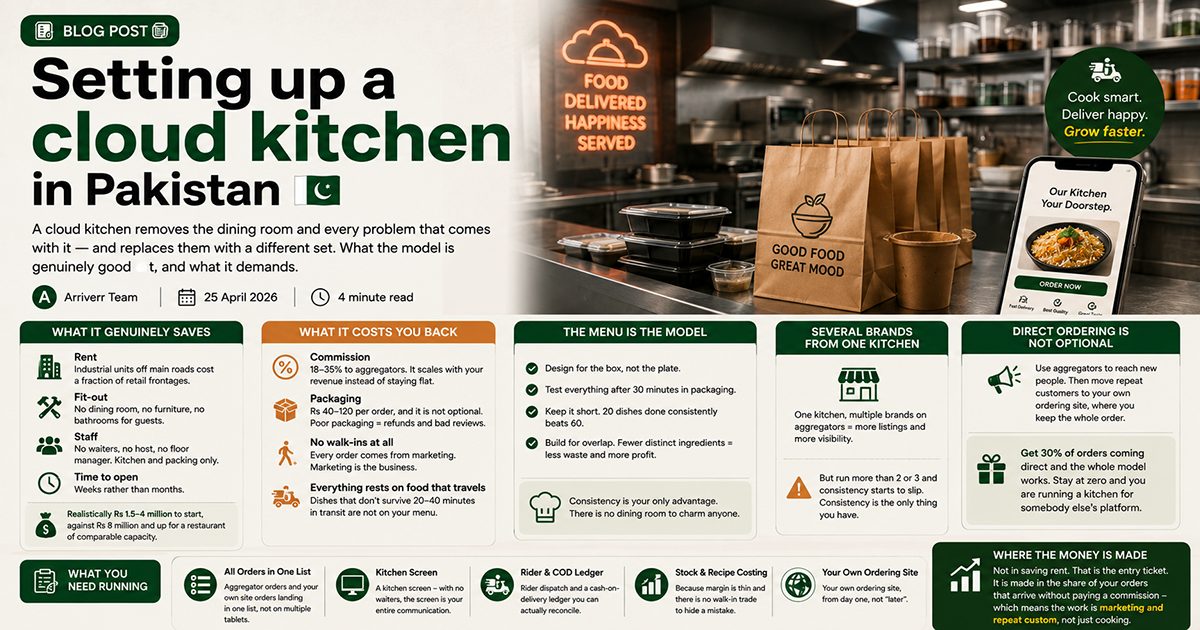
A cloud kitchen removes the dining room and every problem that comes with it. No frontage, no waiters, no fit-out, no Friday night queue. It replaces them with a different set of problems, and being clear-eyed about which set you prefer is most of the decision.
What it genuinely saves
- Rent. An industrial unit off a main road costs a fraction of a retail frontage, and the location barely matters as long as riders can reach it.
- Fit-out. No dining room, no furniture, no bathrooms for guests, no interior designer.
- Staff. No waiters, no host, no floor manager. Kitchen and packing only.
- Time to open. Weeks rather than months.
Realistically Rs 1.5–4 million to start, against Rs 8 million and up for a restaurant of comparable capacity.
What it costs you back
Commission
The big one. If every order comes through an aggregator at 18–35%, you have replaced rent with something that scales with your revenue rather than staying flat. A cloud kitchen entirely dependent on aggregators has a structural problem, not a temporary one.
Packaging
Rs 40–120 an order, and it is not optional. Food that arrives cold or leaked is a refund and a review. This line is much larger than people budget for.
No walk-ins at all
A restaurant has passing trade. You have none. Every single order is the result of marketing, which means marketing is not a thing you do occasionally — it is the business.
Everything rests on food that travels
Your food is eaten twenty to forty minutes after it leaves. Dishes that do not survive that are not on your menu, regardless of how good they are fresh.
The menu is the model
Design for the box, not the plate.
- Test everything after thirty minutes in packaging. Not out of the pan. Fried food that goes soggy, sauces that separate, salads that wilt — find out now.
- Keep it short. Twenty dishes done consistently beats sixty. Consistency is what gets reorders.
- Build for overlap. The fewer distinct ingredients, the less waste — and waste with no walk-in trade to absorb it is pure loss.
Several brands from one kitchen
The obvious move, and it does work: one kitchen, three brands on the aggregators, more listings and more visibility. But run more than two or three and consistency starts to slip, and consistency is the only thing you have. There is no dining room to charm anyone.
Direct ordering is not optional
This is the single thing that separates cloud kitchens that make money from ones that are busy.
Use the aggregators for what they are genuinely good at — reaching people who have never heard of you. Then move the repeat customers to your own ordering site, where you keep the whole order. A card in every bag with a discount code, a WhatsApp number, a site that remembers their address so the second order takes thirty seconds.
Get 30% of orders coming direct and the whole model works. Stay at zero and you are running a kitchen for somebody else's platform.
What you need running
- Aggregator orders and your own site orders landing in one list, not three tablets on a shelf
- A kitchen screen — with no waiters, the screen is your entire communication
- Rider dispatch and a cash-on-delivery ledger you can actually reconcile
- Stock and recipe costing, because margin is thin and there is no walk-in trade to hide a mistake
- Your own ordering site, from day one, not "later"
Where the money is made
Not in saving rent. That is the entry ticket. It is made in the share of your orders that arrive without paying a commission — which means the work is marketing and repeat custom, not just cooking.
Try it on your own restaurant
Everything described here is in the software. A 7-day trial opens immediately, with no card.